Photographs
13 photographs, which is the whole collection. 11 of the 41 people here have a face and 30 do not: freely licensed portrait photography effectively stops around 1946, so the earliest generations are rich and everybody after them is a name, a life and an empty mount. That is the shape of what survived rather than the shape of the family.
None of these photographs carries a date of its own, so the obvious order is not available and guessing one from the words in a caption would be an invention dressed as a record. They are ordered instead by the youngest person in each, since a photograph cannot be older than the person standing in it, and gathered into twenty year bands. 1 of them is dated exactly, because a recorded family event uses it. A photograph of one person opens that person. A photograph of several people has no single destination, so its names are listed underneath instead.
Born 1845 to 1848
2 plates
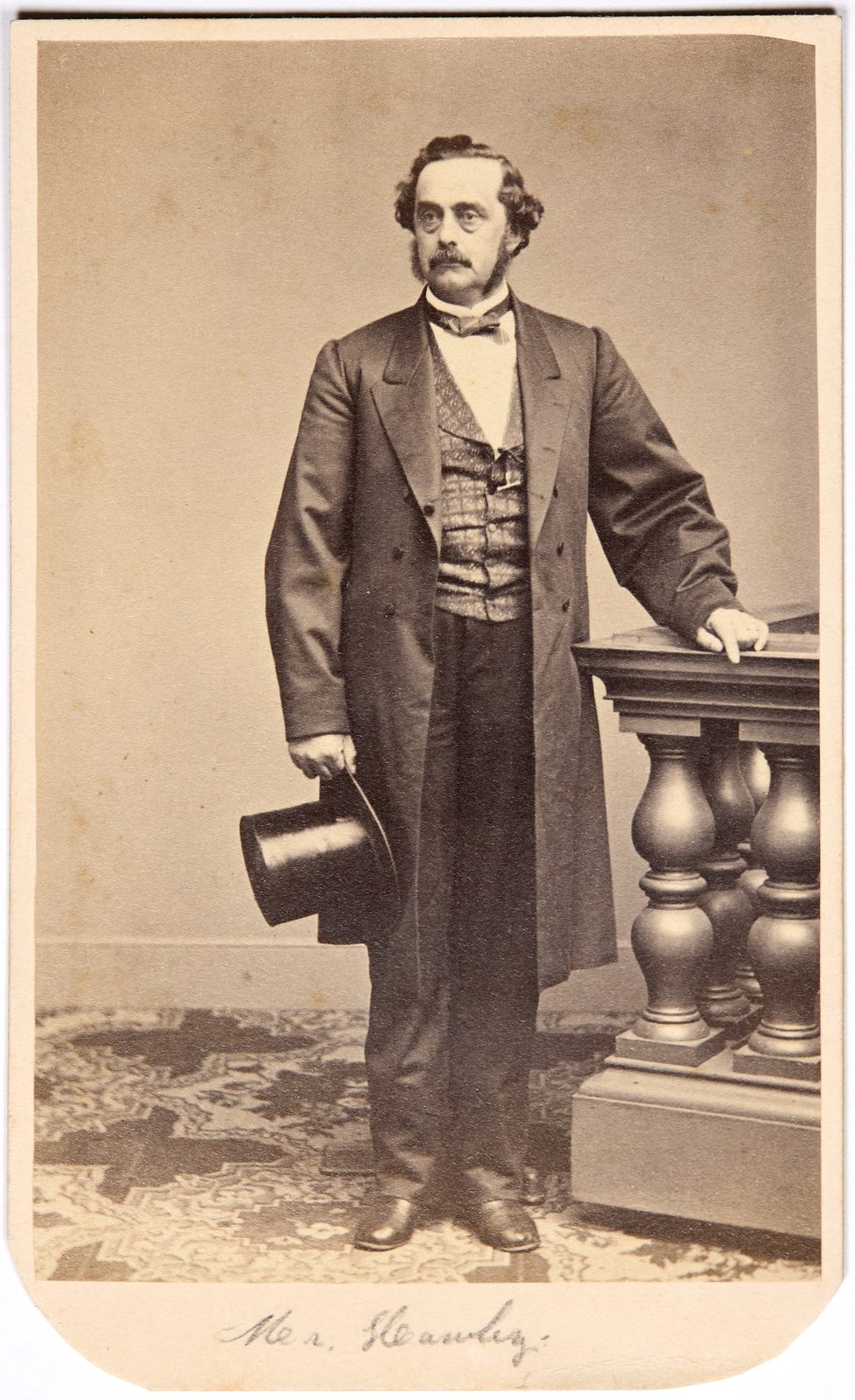
Plate 01
Full-length carte de visite of a man identified only as Mr. Hawley, holding a top hat, studio of Silas Selleck, San Francisco, California, 1860s.
In this photograph
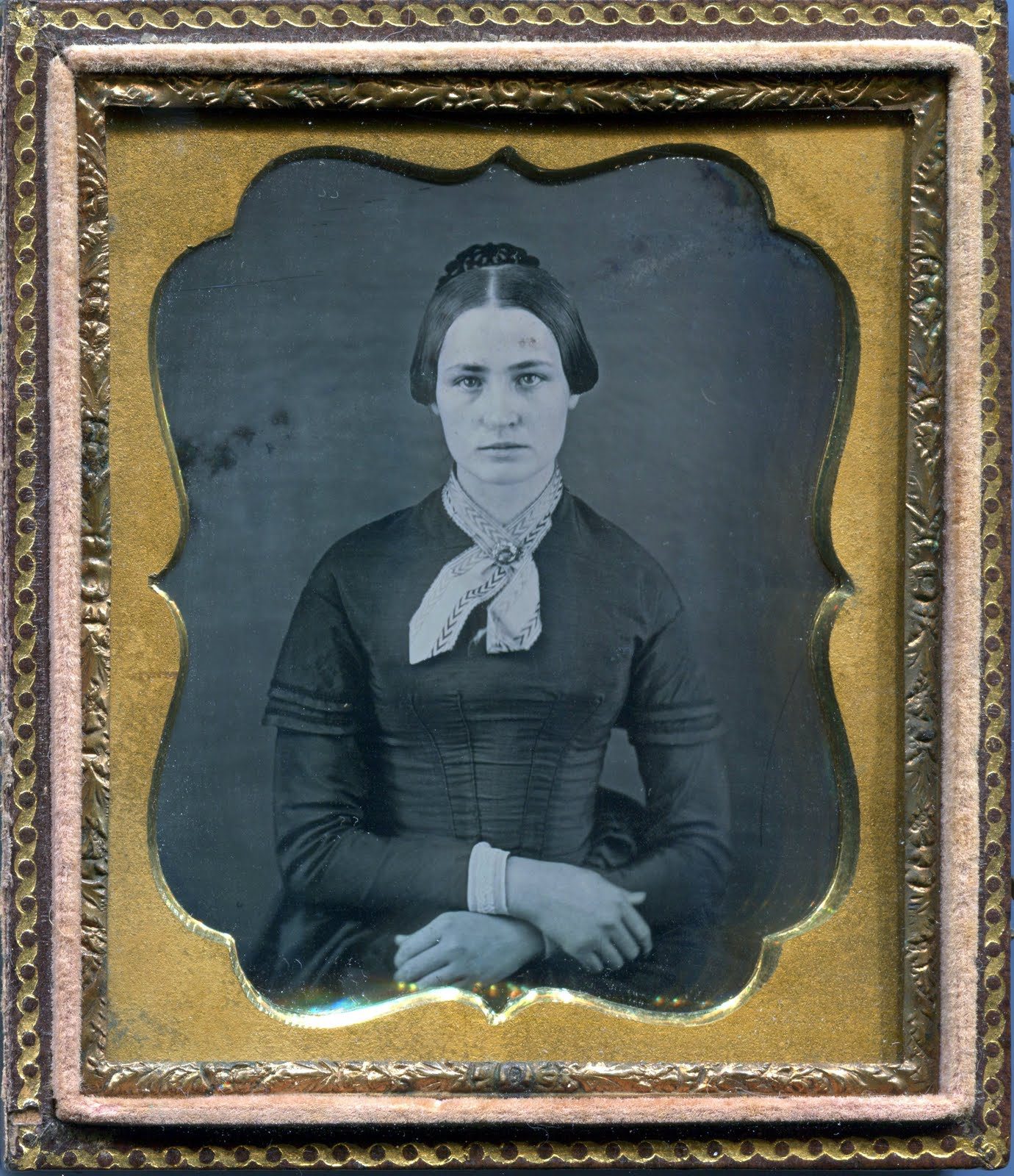
Plate 02
Sixth-plate daguerreotype of an unidentified woman, 1840s, in original frame.
In this photograph
Born 1866 to 1871
4 plates
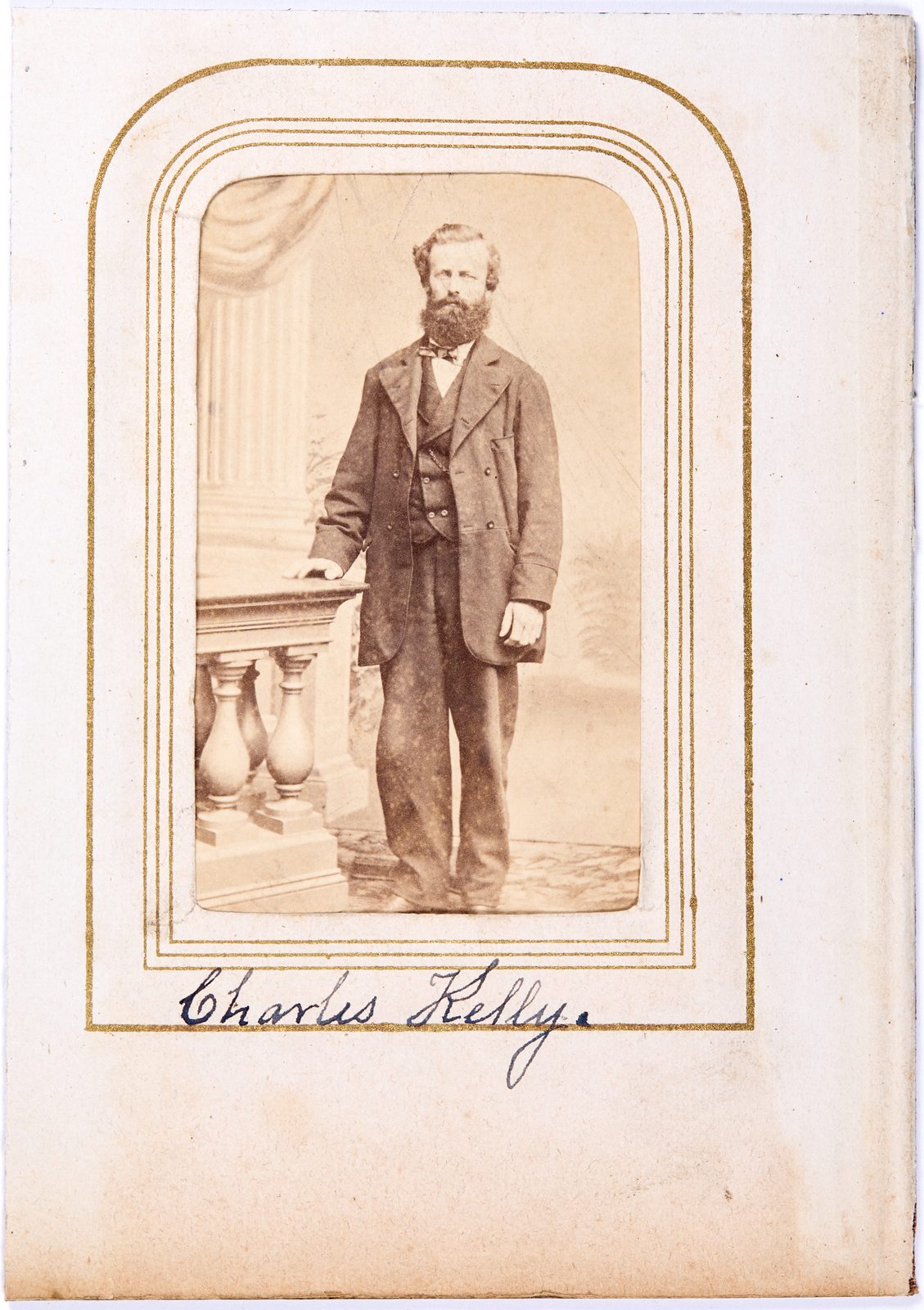
Plate 03
Carte de visite of a bearded man identified as Charles Kelly, studio of William Shew, San Francisco, California, 1860s.
In this photograph
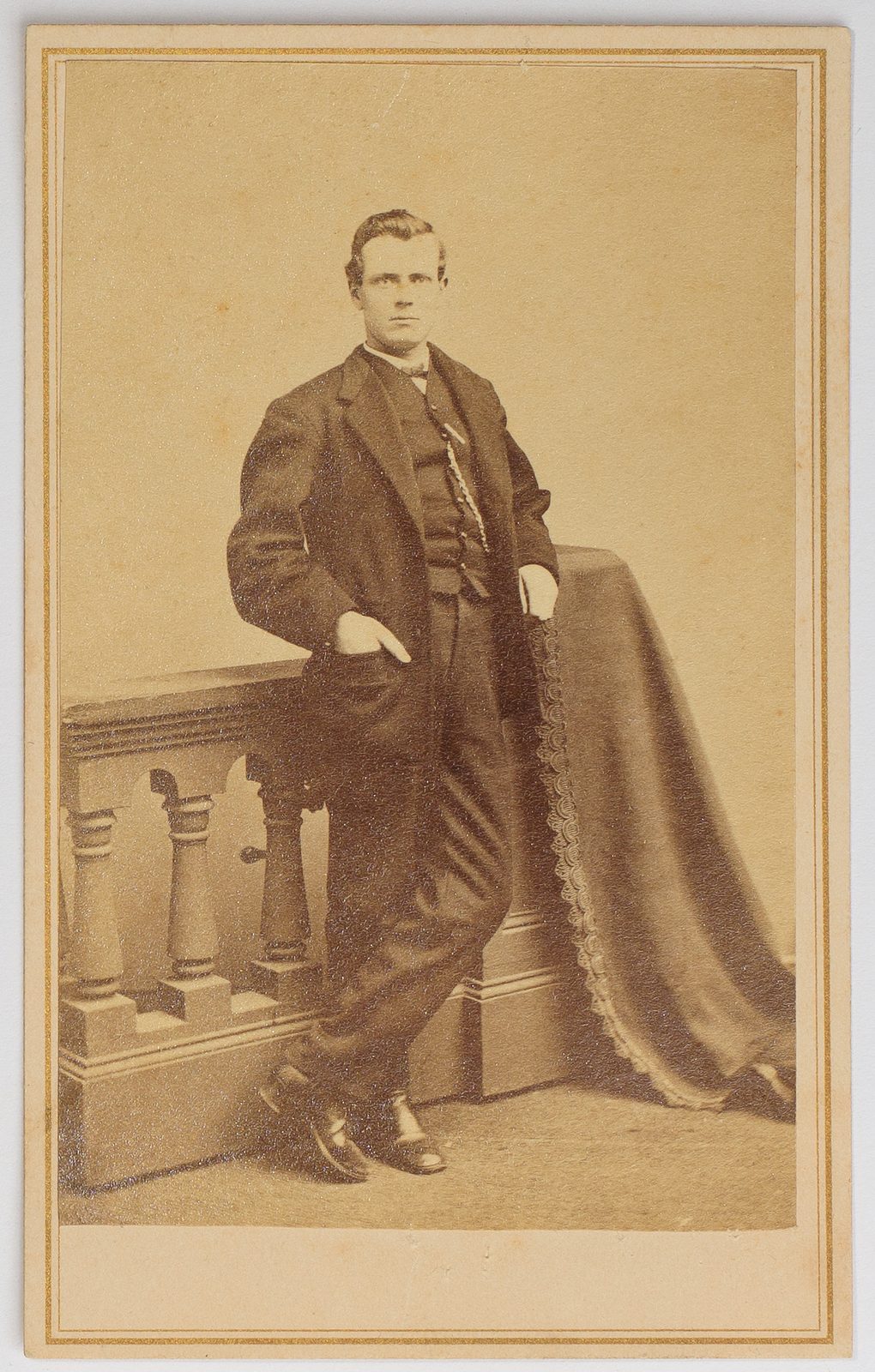
Plate 04
Full-length carte de visite of a young man identified as William Graham, standing beside a balustrade, studio of William Shew, San Francisco, California, 1860s.
In this photograph
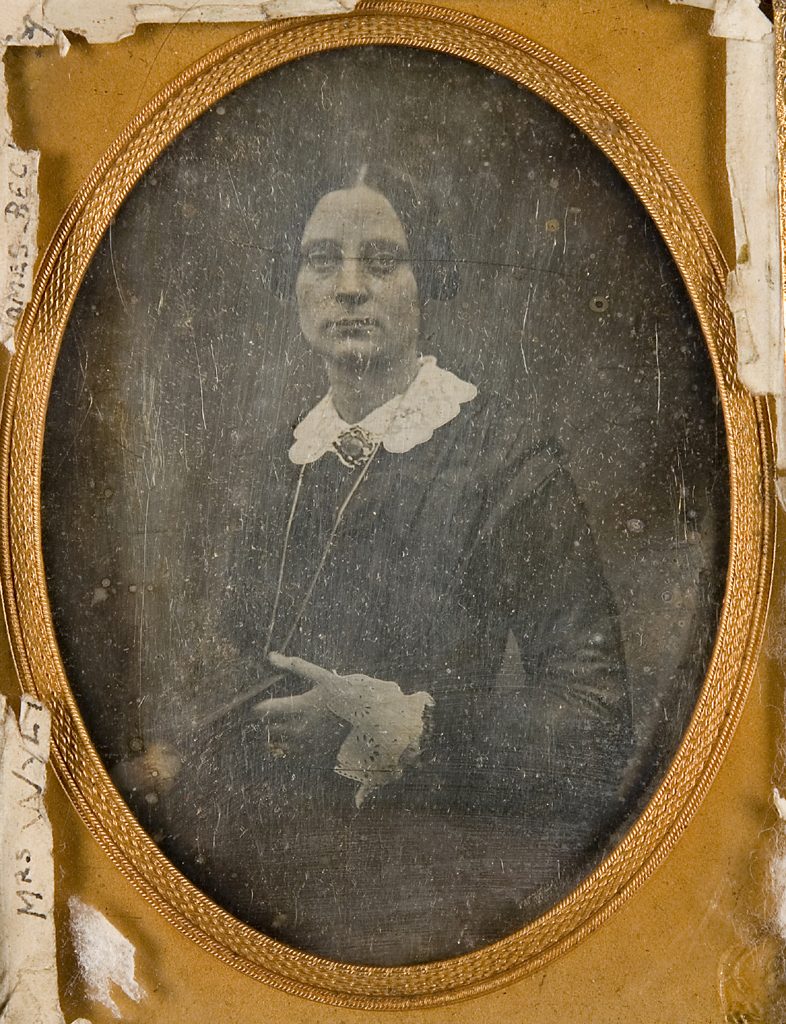
Plate 05
Studio portrait of a woman identified only as Mrs Wyly, photographer James Beck, Powerhouse Museum collection.
In this photograph
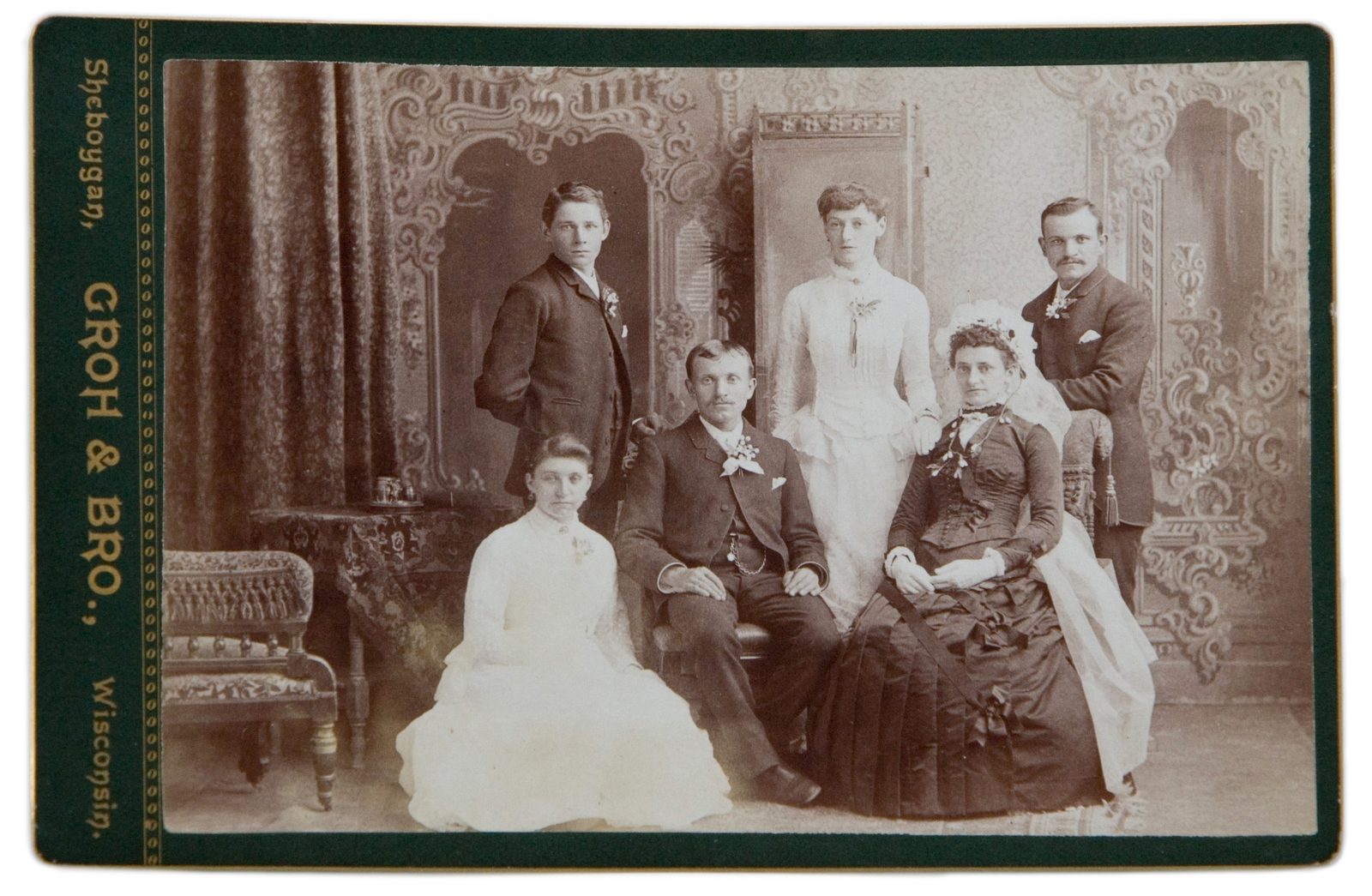
Plate 06
Cabinet card of a wedding party, 1870s or 1880s.
Dated from the recorded event Samuel Trevorrow marries Grace Vingoe.
In this photograph
Nicholas Vingoeabout 1845 to 1897Grace Trevorrow1871 to 1949Samuel Trevorrowabout 1866 to 1913
Born 1893 to 1898
5 plates
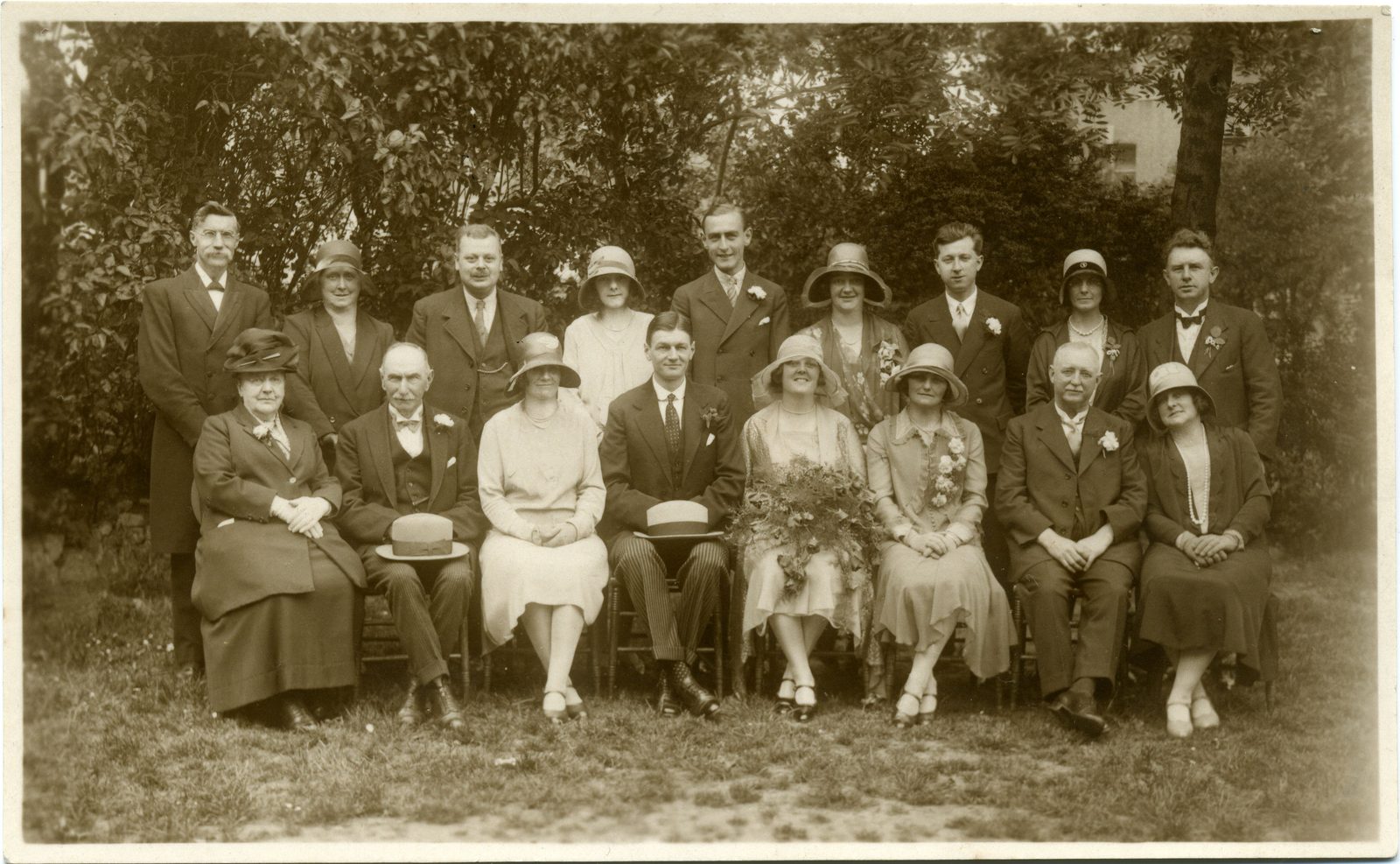
Plate 07
Wedding party portrait, Swindon, Wiltshire, England, 1920s or 1930s, photographer Fred C. Palmer.
In this photograph
Honour Vingoeabout 1848 to 1921William Henry Trevorrowabout 1870 to 1906Nicholas John Trevorrow1893 to 1926
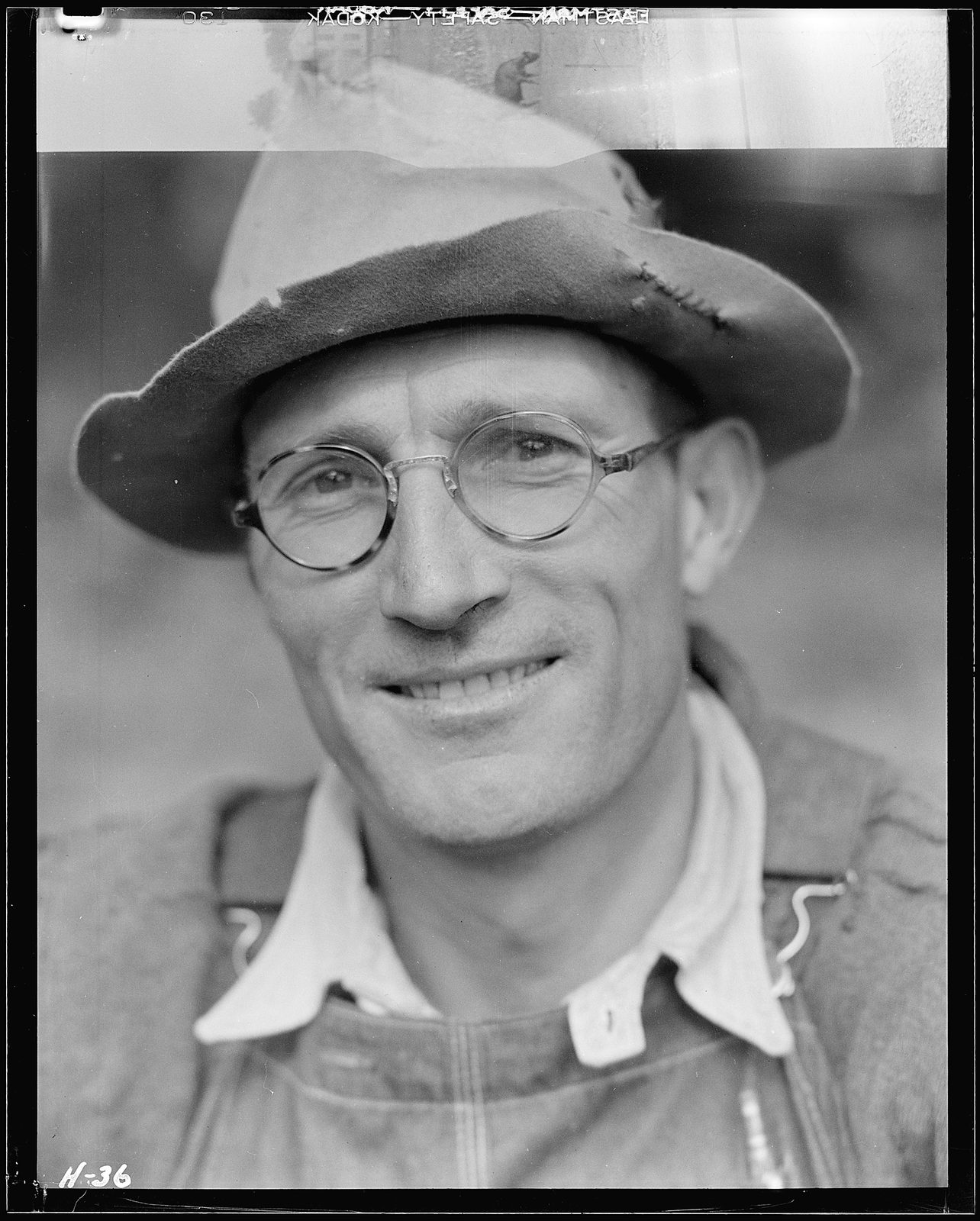
Plate 08
Curtis Stiner, a mountain farmer of East Tennessee, smiling in hat and glasses; part of a 1933 federal survey of families in the Norris Basin ahead of the Tennessee Valley Authority dam project, captioned with his own words that he wanted to stay on his land.
In this photograph
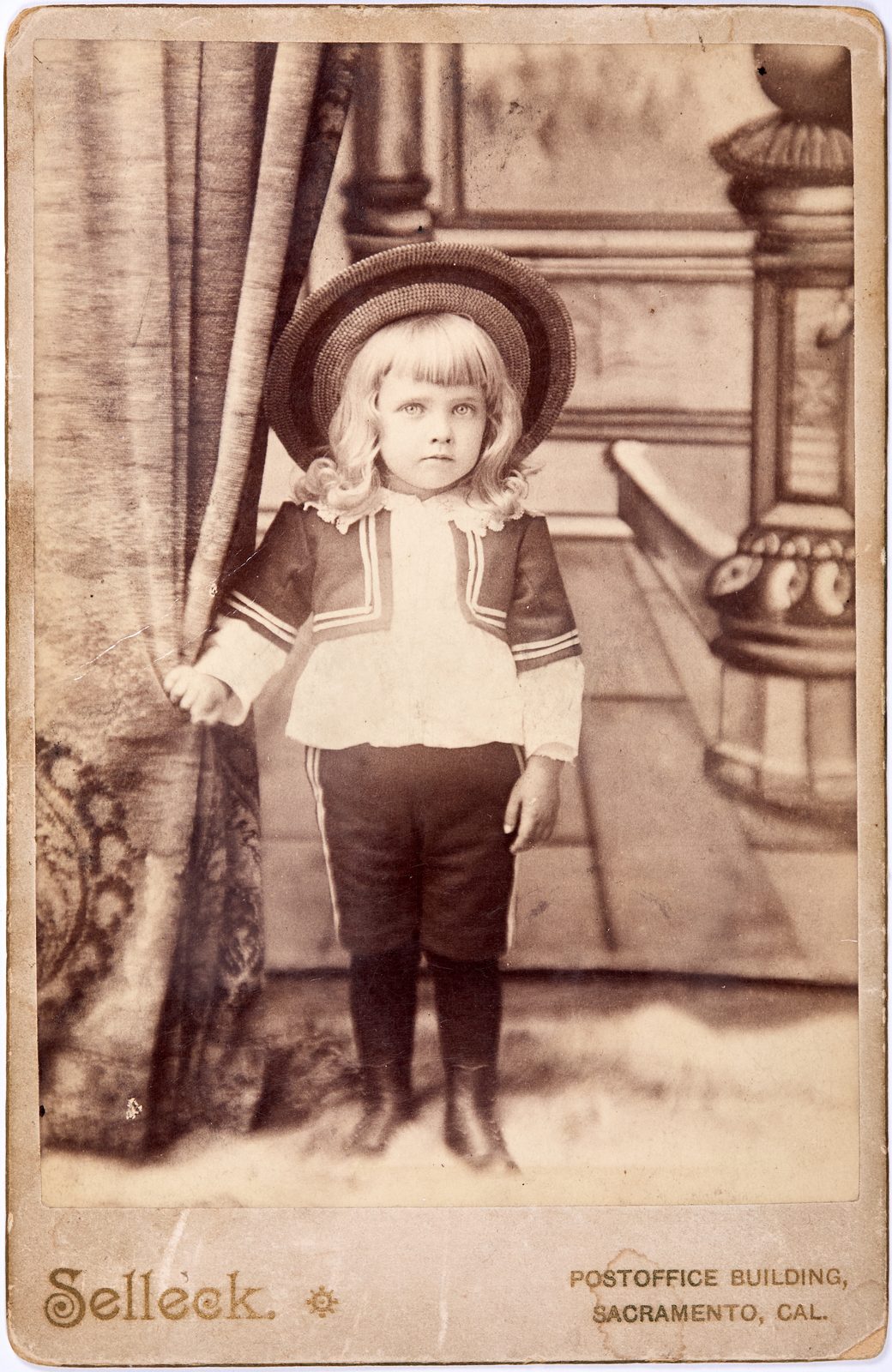
Plate 09
Cabinet card of a small child in a straw hat and belted tunic, holding a curtain, studio of Silas Selleck, Post Office Building, Sacramento, California, 19th century. Catalogued by the collection as an unidentified girl.
In this photograph
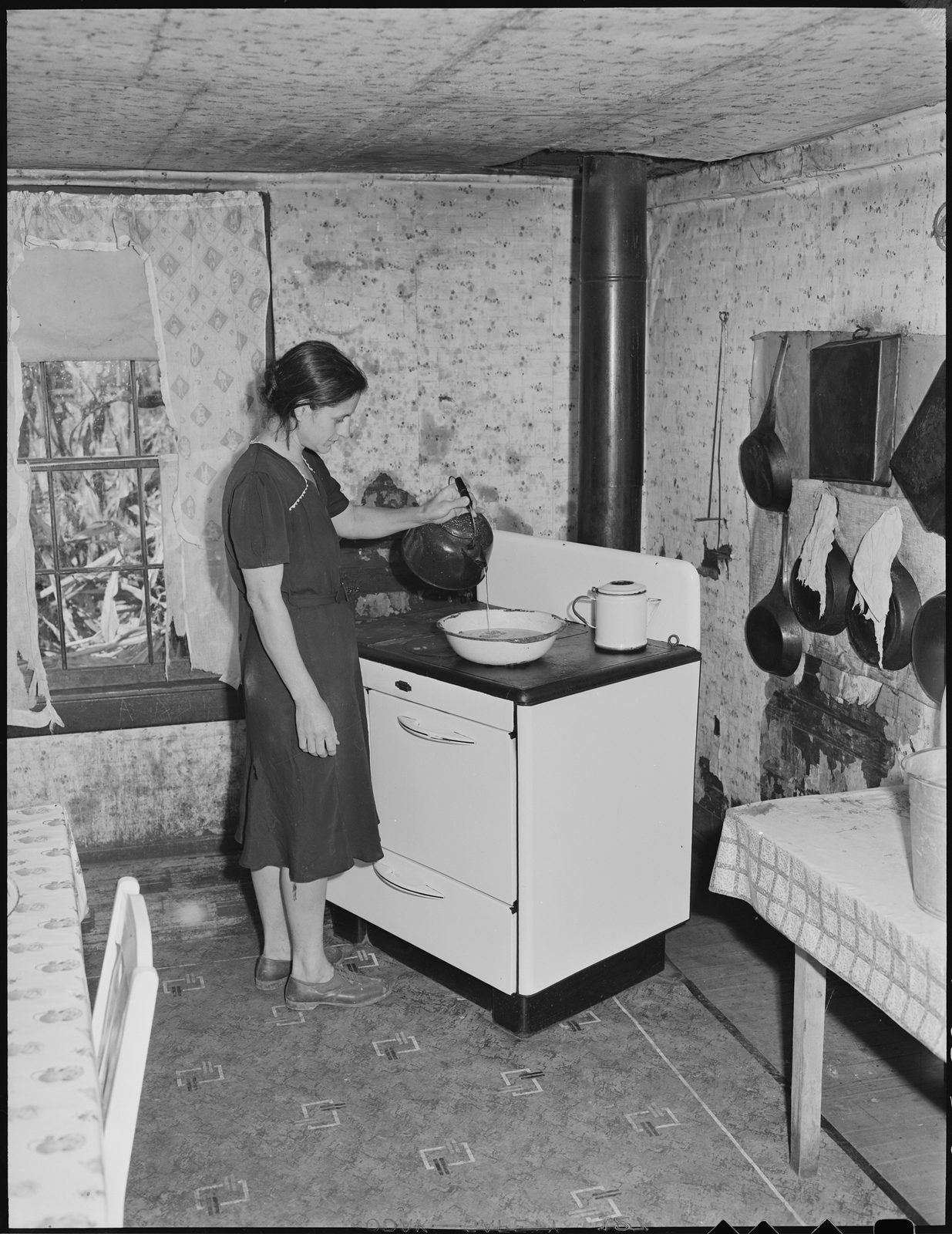
Plate 10
Mrs. Hilbert Bargo, a coal miner's wife, at the stove of the three-room rented house she and her husband shared; 1946 federal survey of coal miners' housing conditions.
In this photograph
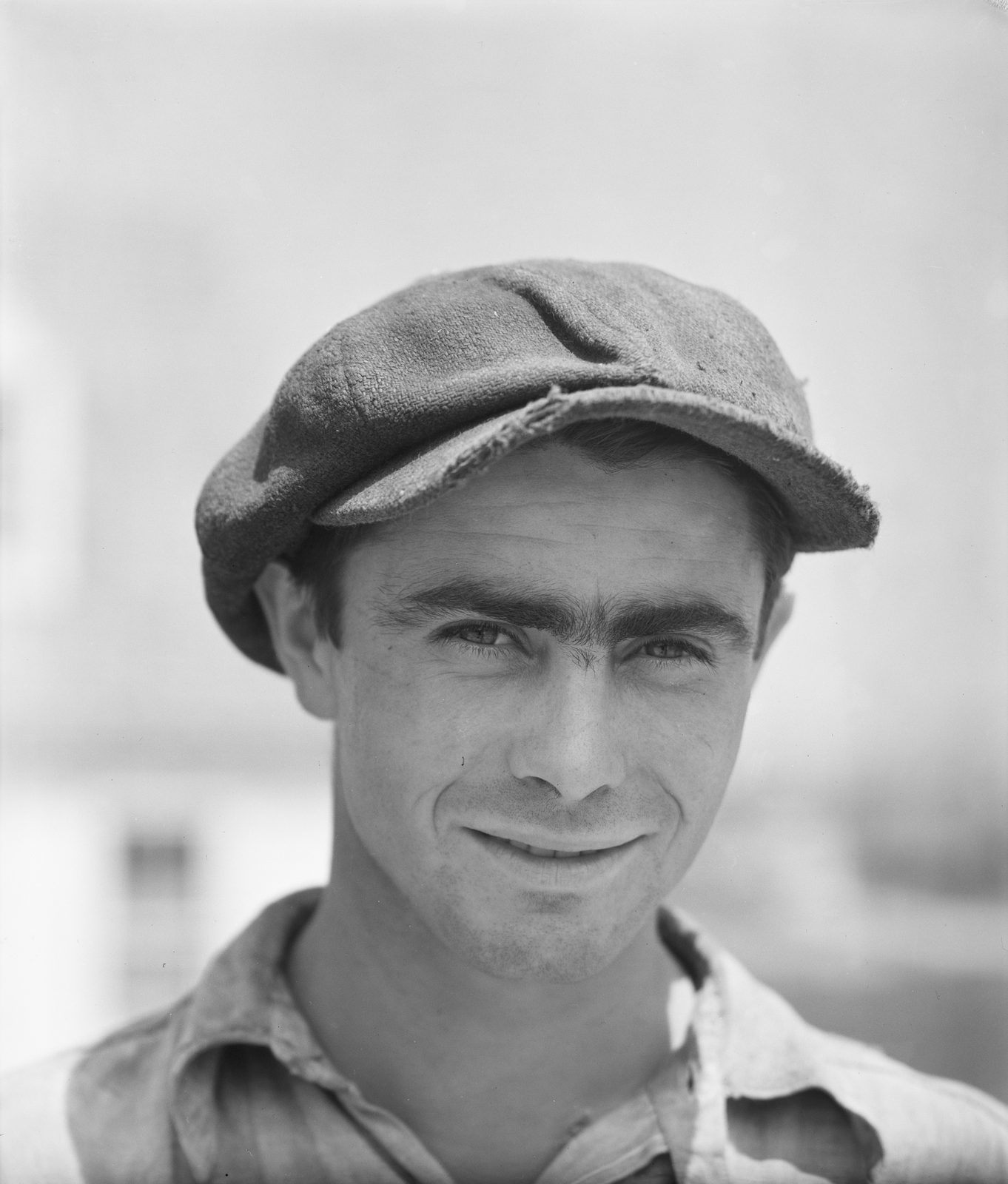
Plate 11
Construction worker in cap and work shirt, smiling, on the Westmoreland subsistence homestead project, Westmoreland County, Pennsylvania, July 1935; photographed by Walker Evans for the Resettlement Administration.
In this photograph
Born 1901 to 1910
2 plates
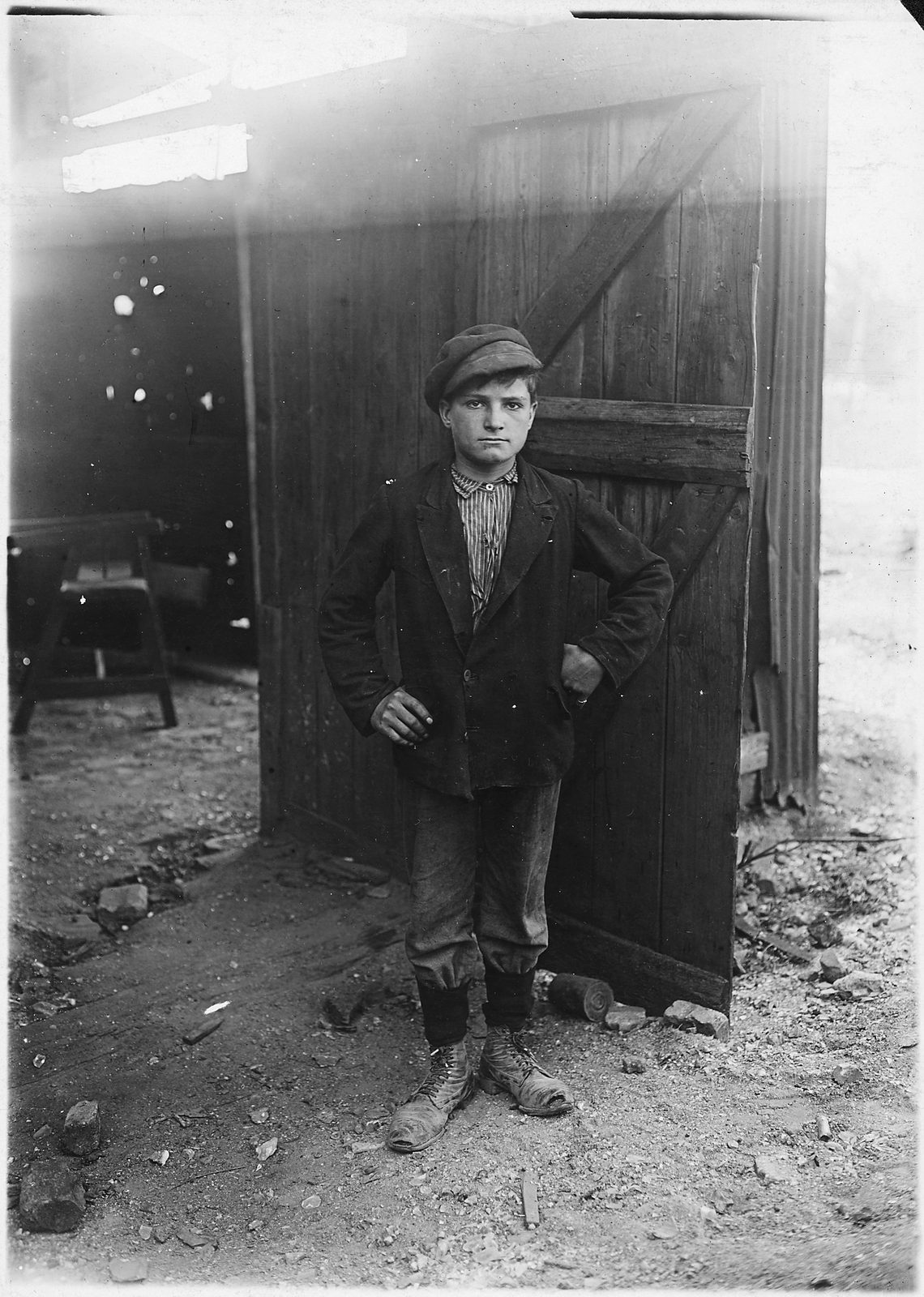
Plate 12
Photograph by Lewis Hine of a teenage glassworks laborer waiting for the night shift outside the factory, Indiana, August 1908, U.S. National Archives.
In this photograph
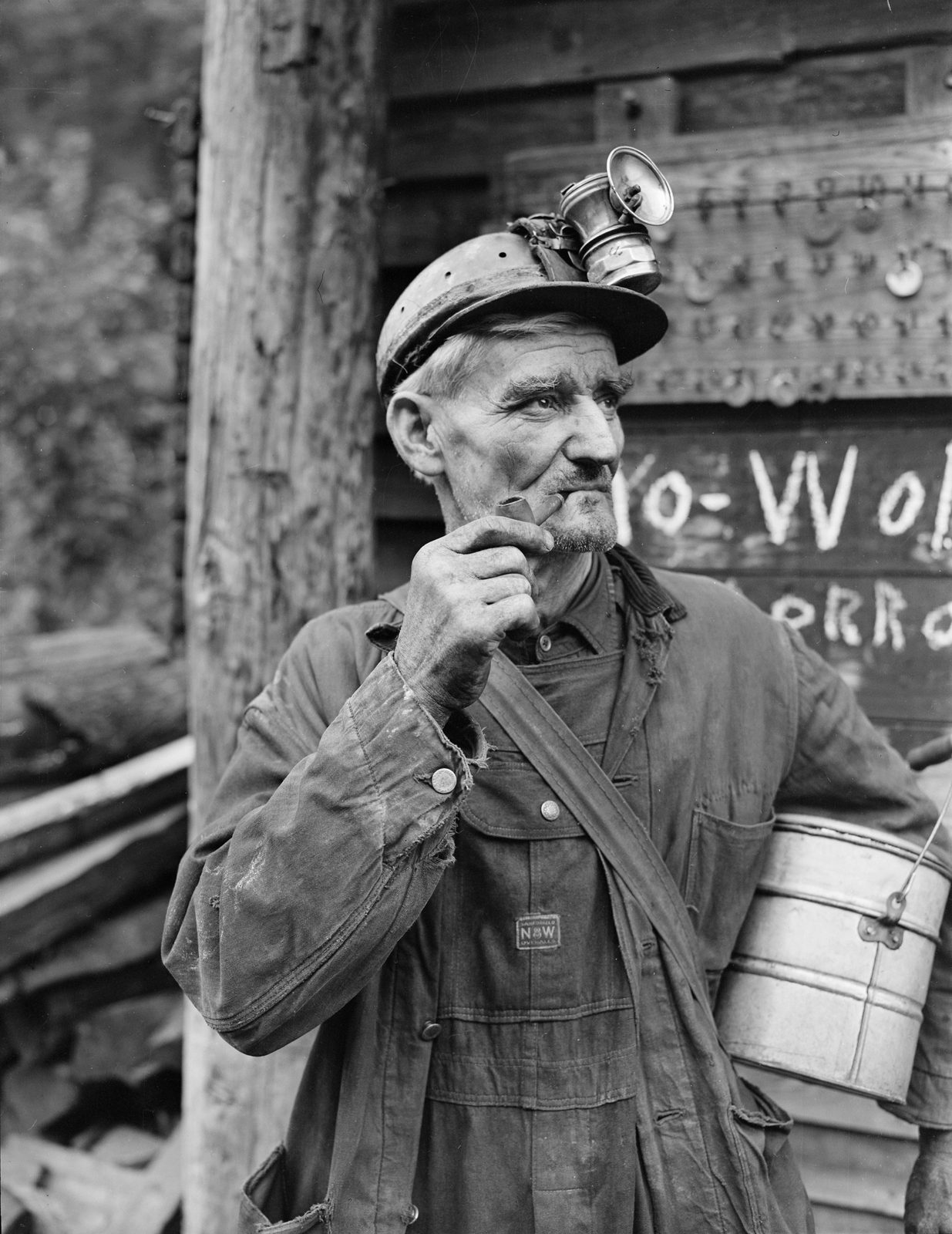
Plate 13
Coal miner in cap lamp holding a pipe, dinner pail slung at his side, P V & K Coal Company, Clover Mine, Lejunior, Harlan County, Kentucky; from the 1946 federal survey of coal miners' housing conditions made when the U.S. government operated the mines.
In this photograph
A photograph showing a living relative who has not agreed to appear is withheld whole, never cropped: cutting somebody out of a family photograph to satisfy a rule is a worse answer than not printing the photograph. None is withheld here. The youngest person in any of these photographs was born in 1910.